
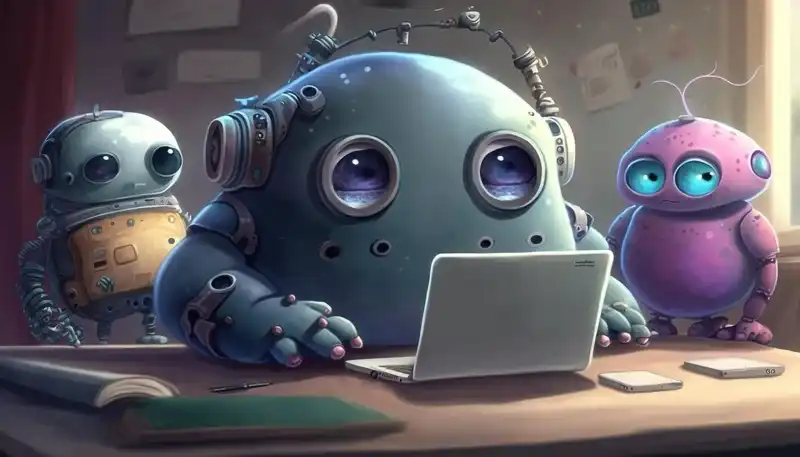
🐝 Introduction: The Power of the Pack
Have you ever watched a flock of birds flying together? They move in perfect formation. They turn at exactly the same time. They never crash into each other.
How do they do it?
They’re not following a leader. Each bird follows simple rules: keep a certain distance from your neighbors, match their speed, and fly towards the center of the flock.
This is called emergent intelligence—smart behavior that comes from simple rules followed by many individuals.
Multiagent Systems is the AI version of this.
🤖 Chapter 1: What is a Multiagent System?
The Simple Definition
A Multiagent System (MAS) is a system where multiple AI agents work together (or compete against each other) to achieve a goal.
Think of it like a football team:
- Each player (agent) has their own role.
- They work together to score goals.
- They communicate and coordinate.
- They adapt to the opponent’s strategy.
Individual agent ≠ team. A team of average players who work together well can beat a team of superstar players who don’t cooperate.
Key Characteristics
1. Multiple Agents
- More than one AI.
- Each has its own goals and abilities.
2. Autonomy
- Each agent makes its own decisions.
- No one is controlling them directly.
3. Interaction
- Agents communicate with each other.
- They share information.
4. Environment
- Agents exist in a shared world.
- They can affect and be affected by the environment.
5. Cooperation or Competition
- Agents can work together (cooperation).
- Or they can work against each other (competition).
- Or both!
🧩 Chapter 2: How Multiagent Systems Work
The Communication Process
Agents in a MAS need to communicate. They do this through:
1. Direct Messages
- Like sending a text message.
- “I’m going left, cover my right!”
2. Indirect Communication
- Like leaving a note on a board.
- Changing something in the environment that others can see.
3. Observing Others
- Watching what other agents do.
- Learning from their behavior.
The Decision-Making Process
Agents make decisions based on:
1. Their Own Goals
- What do they want to achieve?
- “I want to score a goal.”
2. The Environment
- What’s happening around them?
- “The ball is near the goal.”
3. Other Agents
- What are others doing?
- “My teammate is open for a pass.”
4. Limited Information
- They don’t know everything.
- They have to act based on incomplete information.
The Coordination Challenge
The hardest part of MAS is coordination. Getting many agents to work together is incredibly complex.
The coordination challenges:
1. Conflicting Goals
- Agents might want different things.
- “I want the ball, but so do you.”
2. Resource Competition
- Limited resources to share.
- “There’s only one ball.”
3. Communication Delays
- It takes time to communicate.
- Information might be outdated.
4. Unpredictability
- The environment keeps changing.
- Other agents might act unexpectedly.
5. Scalability
- More agents = more complexity.
- 100 agents is much harder to manage than 10 agents.
🌍 Chapter 3: Real-World Applications of Multiagent Systems
Multiagent Systems aren’t just theory—they’re used in many real-world applications.
1. Traffic Management
The problem: Traffic jams waste time and cause pollution.
The solution: Multiple AI agents control traffic lights.
- Each agent controls one intersection.
- Agents communicate with neighboring intersections.
- They coordinate to optimize traffic flow.
- They adjust in real-time based on traffic conditions.
The result: Less congestion, faster commutes, lower emissions.
2. Autonomous Vehicles
The problem: Self-driving cars need to avoid accidents.
The solution: Multiple agents (cars) communicate.
- Cars share information about the road.
- They warn each other about hazards.
- They coordinate to merge safely.
- They avoid collisions with each other.
The result: Safer roads, more efficient driving.
3. Supply Chain Management
The problem: Supply chains are complex and fragile.
The solution: Multiple agents manage the supply chain.
- Factory agents monitor production.
- Warehouse agents manage inventory.
- Transport agents handle shipping.
- They communicate to coordinate delivery.
The result: Efficient delivery, less waste, lower costs.
4. Multi-Agent Robotics
The problem: One robot is limited in what it can do.
The solution: Multiple robots work together.
- Warehouse robots: Multiple robots move goods.
- Search and rescue: Robots search for survivors.
- Construction: Robots build structures together.
- Agriculture: Robots plant and harvest crops.
The result: More efficient, more capable than individual robots.
5. Auctions and Markets
The problem: Markets are complex and hard to optimize.
The solution: Multiple AI agents participate in auctions.
- Agents bid on items.
- They compete for resources.
- They find optimal prices.
- They create efficient markets.
The result: Better prices, more efficient allocation.
6. Disaster Response
The problem: Responding to disasters is chaotic.
The solution: Multiple agents coordinate the response.
- Agents assess the damage.
- They coordinate rescue efforts.
- They allocate resources efficiently.
- They communicate with each other.
The result: Faster response, more effective rescue.
7. Smart Grid
The problem: Managing electricity is complex.
The solution: Multiple agents manage the grid.
- They balance supply and demand.
- They predict energy usage.
- They integrate renewable energy.
- They respond to outages.
The result: More efficient electricity, less waste.
8. Gaming
The problem: Creating realistic game AI is hard.
The solution: Multiple agents create game worlds.
- Enemy agents pursue you.
- Allies help you.
- NPCs populate the world.
- They create complex, realistic behavior.
The result: More immersive gaming experiences.
🎮 Chapter 4: Multiagent Systems in Video Games
You’ve probably already experienced multiagent systems without knowing it!
How Games Use Multiagent Systems
1. Enemy AI
- Multiple enemies coordinate attacks.
- They surround you.
- They work together to defeat you.
2. Friendly AI
- Your allies follow you.
- They support you in battle.
- They act independently but cooperatively.
3. NPC Behavior
- Non-player characters (NPCs) live in the world.
- They go about their daily lives.
- They react to your actions.
4. Strategy Games
- Multiple armies fight against each other.
- They coordinate attacks and defenses.
- They adapt to your strategy.
Example: The Sims
In The Sims, each Sim is an autonomous agent.
- They have their own goals and desires.
- They interact with other Sims.
- They make their own decisions.
- They form relationships.
The result: A complex, lifelike simulation that emerges from simple rules.
Example: StarCraft
StarCraft is a real-time strategy game with multiple AI agents.
- Multiple units fight against each other.
- They coordinate attacks.
- They adapt to your strategy.
- They build and manage resources.
The result: Challenging, dynamic gameplay that requires strategy.
🧪 Chapter 5: The Challenges of Multiagent Systems
While MAS is powerful, it has significant challenges.
1. Coordination
Getting many agents to work together is incredibly complex.
- Challenge: Agents might have conflicting goals.
- Solution: Careful design of incentives and rules.
2. Communication
Agents need to communicate, but communication can be expensive.
- Challenge: Too much communication can be slow.
- Solution: Efficient communication protocols.
3. Scalability
More agents = more complexity.
- Challenge: 1000 agents is much harder than 10 agents.
- Solution: Scalable algorithms and architectures.
4. Trust and Reliability
Agents need to trust each other.
- Challenge: Some agents might be malicious.
- Solution: Reputation systems, verification.
5. Security
Multiagent systems can be vulnerable to attacks.
- Challenge: A malicious agent could disrupt the system.
- Solution: Robust security and detection systems.
6. Transparency
It’s hard to understand what agents are doing.
- Challenge: Complexity makes understanding difficult.
- Solution: Explainable AI techniques.
7. Emergent Behavior
Unexpected behavior can emerge from simple rules.
- Challenge: This can be dangerous or surprising.
- Solution: Careful testing and monitoring.
🔮 Chapter 6: The Future of Multiagent Systems
Multiagent systems are evolving rapidly. Here’s what’s coming:
1. Swarm Intelligence
What it is: Large groups of simple agents working together.
Examples:
- Swarms of drones delivering packages.
- Swarms of robots building structures.
- Swarms of sensors monitoring the environment.
The magic: Simple rules + many agents = amazing results.
2. Human-Agent Teams
What it is: Humans and agents working together.
Examples:
- Emergency response teams with agents.
- Creative teams with AI collaborators.
- Medical teams with AI assistants.
The magic: Combines human creativity with AI capabilities.
3. Ubiquitous Agents
What it is: Agents everywhere, working for you.
Examples:
- Your phone has agents that manage your schedule.
- Your car has agents that manage maintenance.
- Your house has agents that manage energy.
The magic: Agents seamlessly improve your life.
4. Agent Societies
What it is: Entire digital worlds populated by agents.
Examples:
- Digital markets with trading agents.
- Digital cities with planning agents.
- Digital ecosystems with simulated agents.
The magic: Simulating complex systems at scale.
5. Self-Adapting Systems
What it is: Systems that adapt to change automatically.
Examples:
- Smart grids that adapt to demand.
- Transportation systems that adapt to traffic.
- Manufacturing systems that adapt to demand.
The magic: Systems that optimize themselves.
🏁 Conclusion: The Power of Many
Multiagent Systems are one of the most exciting areas of AI. They demonstrate a fundamental truth:
Many simple agents working together can achieve things that no single agent could do alone.
What we’ve learned:
- Multiagent Systems = multiple AI agents working together.
- Communication and coordination are key.
- They’re used in traffic management, robotics, gaming, and more.
- They have significant challenges.
- The future is full of possibilities.
The power of many:
- A single ant is weak.
- An ant colony is incredibly powerful.
- A single bird is ordinary.
- A flock of birds is extraordinary.
The same is true for AI. When AI agents work together, they can achieve amazing things!
In Our Next Article:
Now, let’s explore one of the most fascinating AI systems in the world—OpenAI!